Stella Corkery
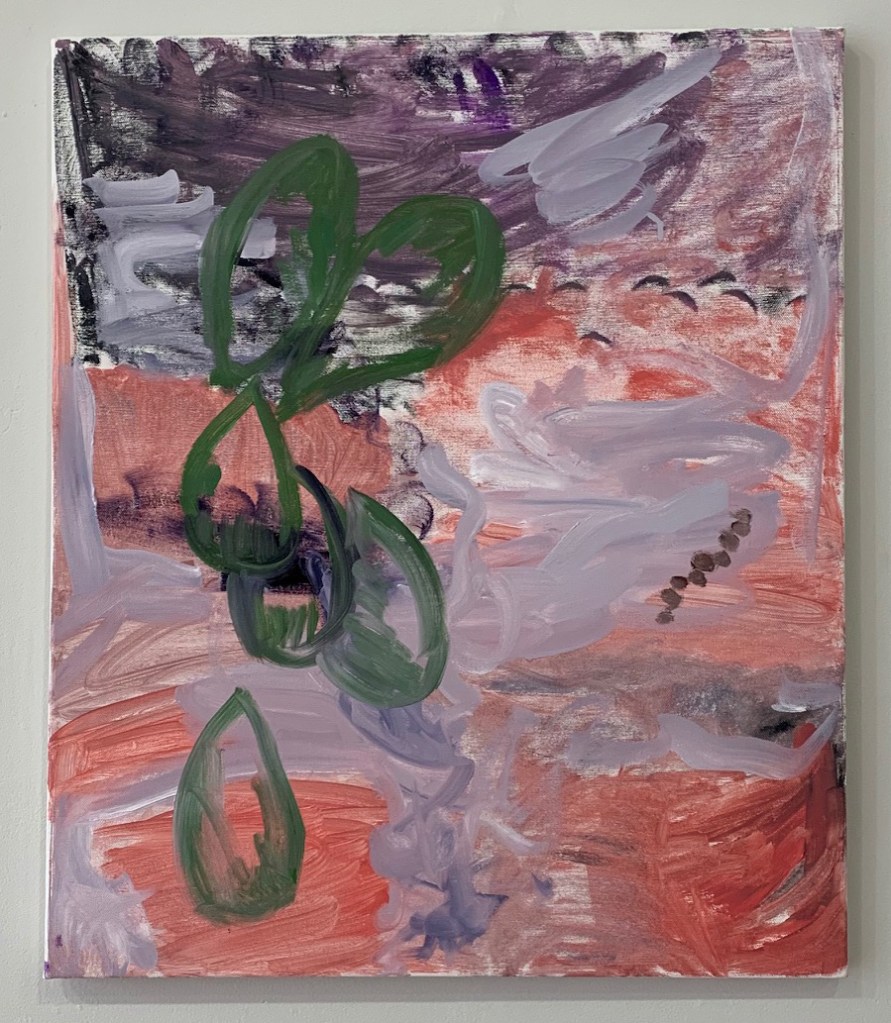
Oil and gesso on canvas, 600mm x 510mm
https://michaellett.com/artist/stella-corkery/https://michaellett.com/artist/stella-corkery/
Stella Corkery’s work often plays off of musical investigations and experiences, her work draws from art histories and a pop sensibility. Corkery creates paintings with a test and play of materials, gesso is a material often used in painting but isn’t often referenced in artists work, Corkery however attempts to include all materials used and in many ways highlights the mediums which audience become complacent of. The colours which are used in these works are rich holding structure as the paint gets to speak through the colours, the gestural marks enhance the colour choices attempting to hide and at time highlight the imagery when included.
Saskia Leek

Oil on aluminium board, 58 x 47 cm.
https://ocula.com/artists/saskia-leek/
The work of Saskia Leek resembles shapes and colours, not taken from the geometry in cubism as one may think but taken from the aspects of prism effects. Leeks work feels vibrant, the colours are lively, bright and usually stands out, the work includes abstracted shapes and images of objects eg. Plants and buildings. I find the colour and play with imagery a relevant influence within my own work, I have currently been thinking about how I select colour and when shapes and colour including cite specific imagery comes in to my works.
Mata Aho Collective
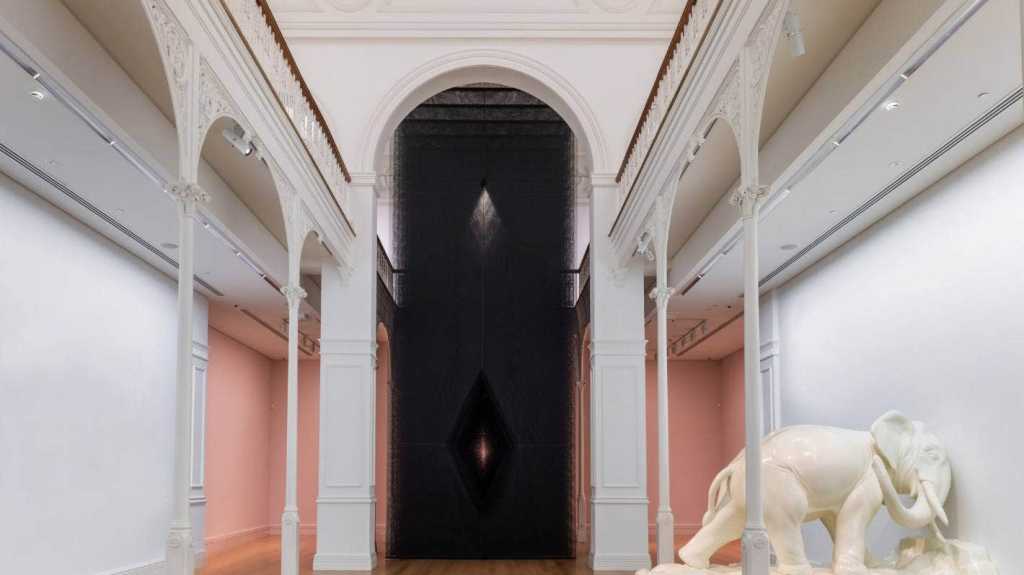
Insect mesh, wool, muka (prepared fiber of harakeke) and cotton, 9 meters long install.
https://www.stuff.co.nz/entertainment/arts/300378089/mori-art-group-mata-aho-collective-awarded-prestigious-walters-prize
The Mata aho collective is a group of four wāhine or as a collaboration between four Māori women artists. The work made is often large in scale and is framed around mātauranga Māori. (Mataahocollective.com) The group consists of Erena Baker, Sarah Hudson, Bridget Rewti and Terri Te Tau. The Mata aho collective won the Walters prize with Maureen Lander at the AAG in 2021 with the large installation work titled Atapō (2020) made from insect mesh, wool, muka (prepared fiber of harakeke) and cotton. The collectives work surrounds methodologies surrounding indigenous making in consciousness of being wāhine, Māori women, these methodologies play into the complexities of Māori life.
Sonya Lacey
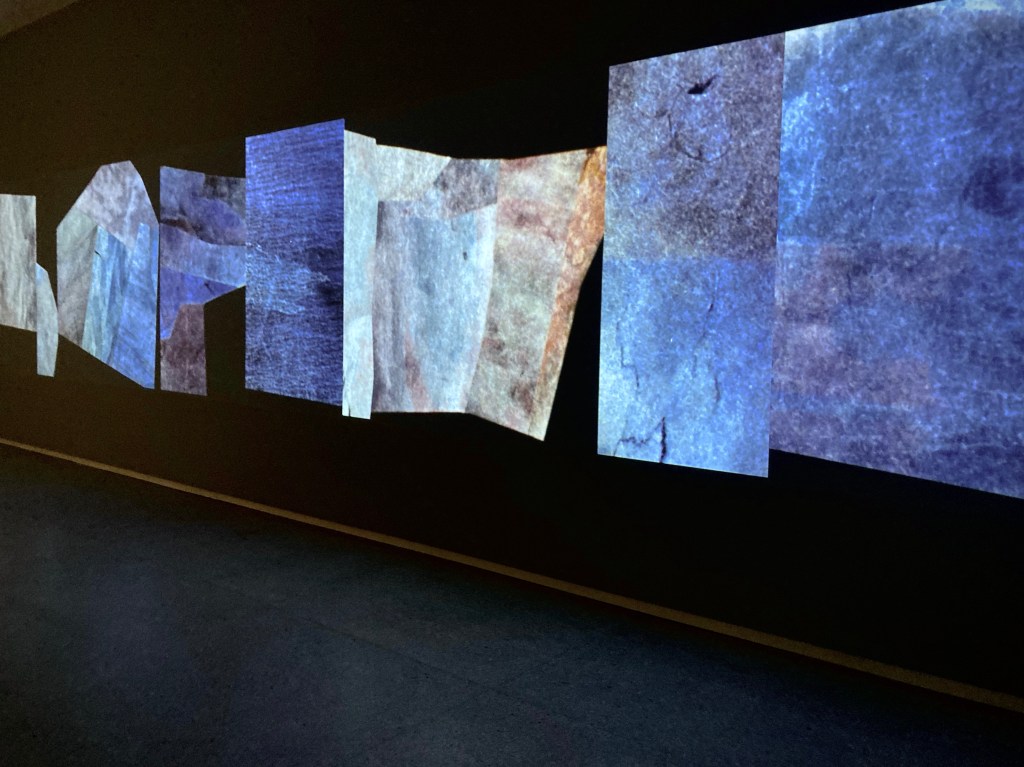
Projectors, small painting objects and two pool levels, Installation.
Own image taken on phone.
Sonya Lacey often works with a material focus to her practice, recently at the Auckland Art gallery she showed a series of works surrounding the pool, her work included a large projection, small projections two paintings and pool side lines for water levels. The works she makes was with newspaper and chemicals which distorted and erased the images which were on the newspaper. Lacey also works with other mediums and chemicals including a work around the ball point pen which I was introduced to from a talk she had done at Whitecliffe.
I normally feel engulfed and confronted with large works but the scale of the large projection encapsulated myself into a slow trance like state where I was slowly being taken into the work as the images scroll over top of each other, the work held faint ideas which I enjoy attempting to explore, the work was ever changing and shifting.
Kate Newby

Terracotta tiles, installed at Adam Art Gallery Te Pātaka Toi
Wellington Te Whanganui-a-Tara, New Zealand.
https://www.katenewby.com/adam.html
Kate Newby is an artist from Tāmaki Makaurau, Newby’s work consists of a play between a variety of materials, often materials in which I enjoy using in my own practice in ways which I am interested in exploring, specifically looking at Newby’s brick and handmade tile work. Newby works between ideas of the mark through handmade objects in relation to found or readymade materials of which her practice surrounds. I am enjoying seeing and learning of the install strategies and ways in which work fits the specific galleries and locations which they occupy, playing off of their surroundings. The materials used seem to be common material objects used in buildings as well as found objects.
Kate Gottgens
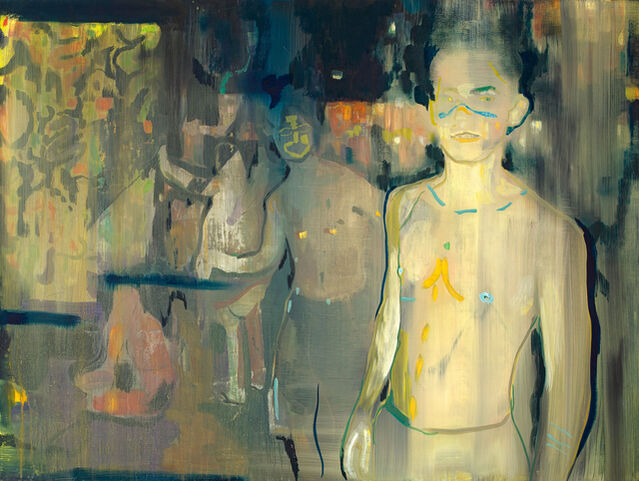
Oil on canvas, 85 × 120 cm, SMAC gallery
https://www.artsy.net/artwork/kate-gottgens-rattle
Kate Gottgens is a South African artist and draws inspiration of figures from both life experiences or pop culture. Gottgens also works from found images when painting them giving them new meanings and life through the way she chooses colour and through the techniques that the paint used allows, the paint is played with as both a texture and imagery or figurative, there is a play going on in her work where information is curated, figures are often semi-fleshed out and almost living a ghost like state but very apparent. Gottgens choices when painting have an influence in the ways I consider blocking and layering images I myself use and how I can consider the back ground in relation to other formal aspects through the ideas I am testing through the paint materials which are applied.
(https://www.smacgallery.com/artist/kate-gottgens)
Tomma Abts
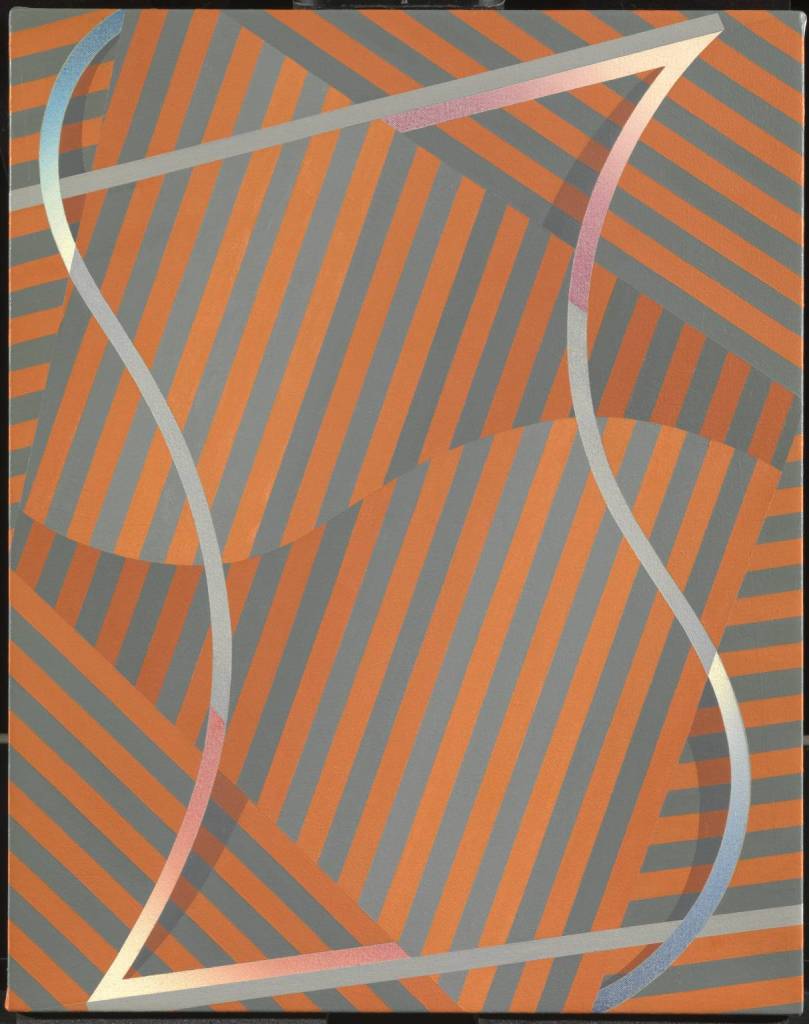
Acrylic paint and oil paint on canvas, 480 × 380 mm.
Born 1967 Presented by Tate Members 2011 http://www.tate.org.uk/art/work/T13592
Tomma Abts is an artist based in London England born in Germany, she is known for her abstract paintings done with paints, shapes and lines are flattened through the brush techniques used, I find that when paint is flat there is a higher focus on the colour whereas when paint is thicker it becomes a ‘material focus’. Abts work draws inspiration from themselves, they are created through themselves not planned out and building in on its self, lines are drawn out which Abts highlights and expands on. Colour compositions and line work draws me in, the intuitive making process the work makes its self are ideas which I love exploring and pushing and pulling ideas which Abts executes perfectly with the way she creates.
(https://www.davidzwirner.com/artists/tomma-abts/biography
https://www.tate.org.uk/art/artworks/abts-zebe-t13592)
Marianne Wex

Photobook.
https://davidcampany.com/marianne-wex-lets-take-back-our-space/
Marianne We is an artist from Hamburg, Wex is an artist whose work, in specific her work from the series Let’s Take Back Our Space (1972-1977) focuses on the body language between ‘men’ and ‘women’ as a result of patriarchal systems. Marianne Wex came up in a crit with the figure and ideas of positioning and posture, what drew me in to her work and ideas is fitting into a system created against a group of people, history has been made to benefit a specific array of people and to pander to that group, I often question my positioning but also how people now can push against the systems used to make people conform to their environments. I enjoy how Wex sets up and poses women in her photos alongside the images of men but in relation to body language of women.
( https://www.artforum.com/news/marianne-wex-1937-2020-84238 )
( https://www.frieze.com/article/marianne-wex)
Rachel Harrison
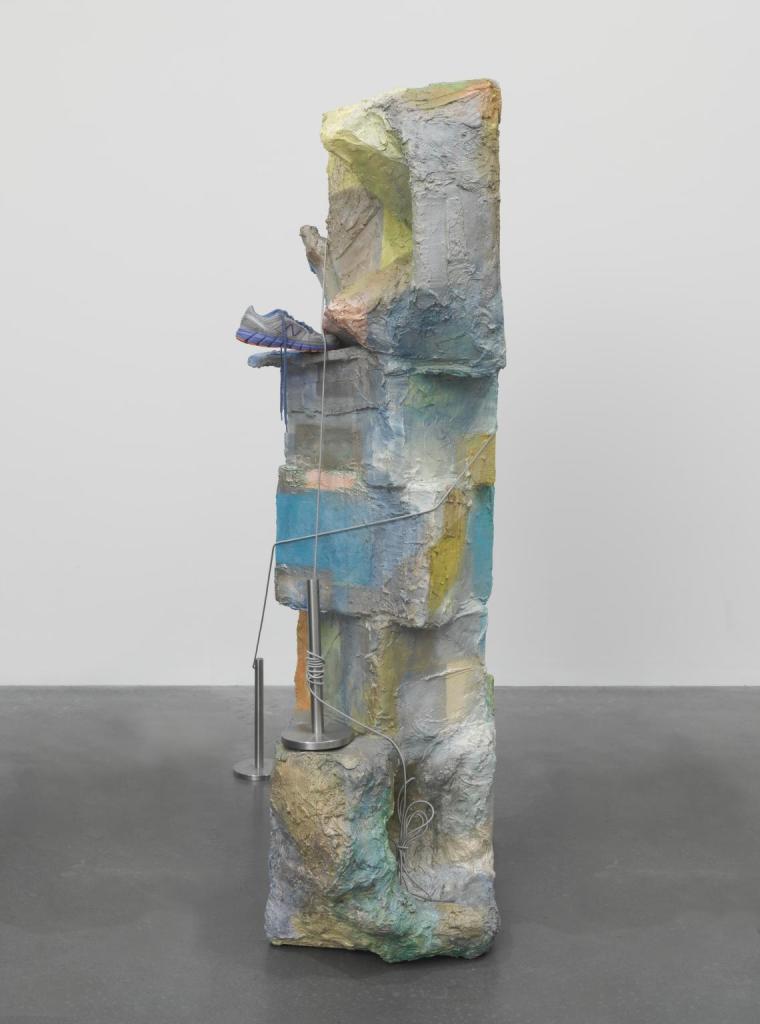
Painted plaster, cardboard, running shoe, cord and metal stanchions, 2235 × 1524 × 1016 mm
Born 1966 Presented by the Tate Americas Foundation, courtesy of the North American Acquisition Committee 2019 http://www.tate.org.uk/art/work/T15292
Rachel Harrison is a sculptor from America whose works are a mixture of handmade objects mixed in with found objects. “Harrison seems to take particular pleasure in grabbing hold of the swirling, chaotic detritus of our inane, over consuming, pop-and-political culture to improvise new meanings and unlikely connections.”
(Matt Dillon in Interviewmagazine. 2019)
This summary of Harrisons work really captured my attention in an almost poetic description of her sculptures and the objects and materials in play within the context of her making. There is a vibrancy to Harrisons sculptures which are enhanced with the materials use and become almost, to me, painterly but in a way of a consciousness to colour and form, these objects are edited and placed but don’t feel forced they allow themselves to be their own thing while retaining references to the consumerist everyday.
(https://www.tate.org.uk/art/artworks/harrison-xlt-footbed-t15292)(https://www.interviewmagazine.com/art/artist-rachel-harrison-and-actor-matt-dillon-confront-their-own-worst-critics)
Emma McIntyre
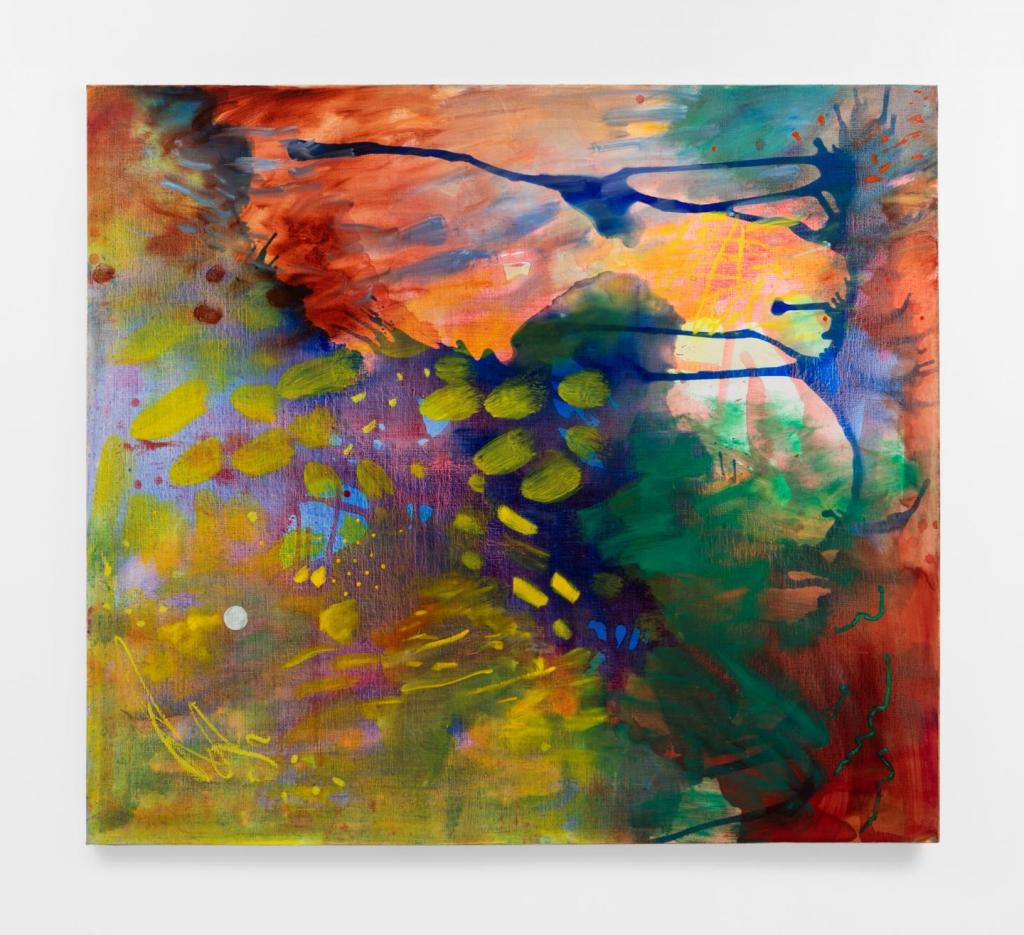
Oil, oil stick, Flashe and acrylic on linen, 142 × 163 cm.
Courtesy: the artist and Chris Sharp Gallery, Los Angeles. https://www.frieze.com/article/emma-mcintyre-pour-plenty-on-the-worlds-2021-review.
Emma McIntyre is a painter from Aotearoa who attempts to push the formal aspects of what painting is pushing against the rules of what painting and art is and means. McIntyre has a focus on materials and formal aspects occasionally including figurative elements within her paintings. In an interview between Victoria Wayne-Jones and Emma McIntyre there seemed to be a focus on the aspects of colour ideas which sprung out to me, McIntyre’s work holds colour with much respect and vibrancy which is aided through her material and technical approaches. The importance of colour and meanings of colour is a conscious idea which I myself am playing with and how I can draw inspiration from colour and the meanings which they hold, meanings which have been given to them.
Monique Lacey
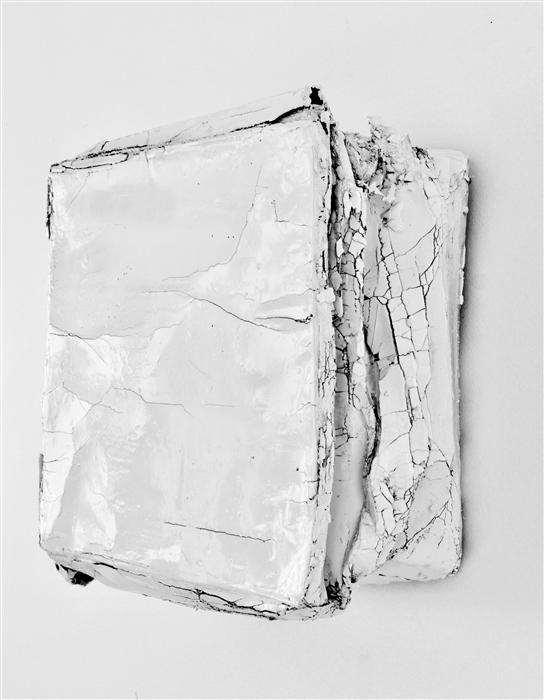
Cardboard, duct tape, plaster, paint, resin, 380mm x 300mm x 250mm.
https://www.sanderson.co.nz/Artist/374/Monique-Lacey.aspx
Monique Lacey is a graduate from Whitecliffe who’s work deals with materials, a main material which is used is cardboard boxes which are used in packaging and is her haul mark material. The way Lacey manipulates her materials and subject matter whilst still keeping the recognisable characteristics of her original materials is something which I am fascinated by and intrigued to include within my own practice. Laceys work is considered as being minimalist, these works pull back and focus on material, the ways which materials are shown and interact and change becomes an investigation towards ideas which may be of use for my future works and thinking about my previous works as well.
(https://www.moniquelacey.com/about-1)
Yona Lee

Stainless steal urban and domestic fixtures, installation, City Gallery Wellington.
https://citygallery.org.nz/exhibitions/yona-lee-in-transit/
Yona Lee is an Auckland based New Zealand / Korean artist whose work looks at how we as a society move through urban spaces, often referencing walk ways in specific the metal railing one may find in a city setting. A large idea or topic which Lee’s work surrounds is the transit or what transit is in a daily setting, her work is currently sculptural work and conscious of space conscious, playing off of her growing up playing cello conscious of spaces being played in. Lee’s work also references the height of people in working with the regulation of infrastructure and the way these structures reference the body through our movement vibrating through space again similar to how she discusses playing music in a physical space.
(https://www.youtube.com/watch?v=a3ueEFc92KQ 2:06)(https://www.youtube.com/watch?v=WEGLIbsZWEs 39:54)(https://dunedin.art.museum/exhibitions/past/yona-lee-2/ )(https://citygallery.org.nz/exhibitions/yona-lee-in-transit/)
Helen O’Leary

Egg, oil emulsion on constructed wood, wood, 15 x 10 x 4 inches.
https://www.patriciasweetowgallery.com/artists/helen-oleary/#artists-bio
Helen O’Leary is an Irish born artist whose work derives from growing up around housing in Ireland in specific ‘big housing’. These ideas of housing comes through her work through materials used, construction methods and also when pigment is added it finds connections to the real work of building construction in specific rural buildings and housing. O’Leary plays with the mundane through her object paintings, often structures are ‘wobbly’ or unstable in character. The works seem broken up and made from found or reconstructed repurposed materials, materials are often cut up and aren’t as they may seem to appear in construction, they are old in nature, used and worn out as what are off cuts, they are not always perfectly neat or factory standard of clean but rugged in nature and used, this plays into my own work of using construction materials which are previously used and repurposed, I enjoy the play with building construction and how I can consider how I repurpose and also display the rawness of the materials I use and how I approach these materials.
(https://www.gf.org/fellows/all-fellows/helen-oleary/)
(https://www.patriciasweetowgallery.com/artists/helen-oleary/#artists-bio)
Emerita Baik

Installation view.
Image courtesy of Cheska Brown. Retrieved from:
https://enjoy.org.nz/n
Emerita Baik is an Aotearoa based artist who came from immigrant parents, her work draws from her migratory background and diversity of being in Aotearoa.
Baik also plays into what it is like to be of different backgrounds to the country she lives in, she is of Korean descent and plays with how she lives in two verbal worlds and ho she responds to living between languages, specifically Korean and English. Baik is also considered as making ‘sculptural paintings’ a term which intrigues myself in my work especially in consideration to material but how Baik deals with being on these ‘between’ worlds and languages of being of immigrant and immigrant parent, not having ties to this land but navigating our background in this country.
(http://www.physicsroom.org.nz/exhibitions/bedrock)
(https://www.stuff.co.nz/life-style/homed/nz-house-garden/300398651/meet-the-maker-korean-new-zealand-artist-emerita-baik)
Lois Dodd
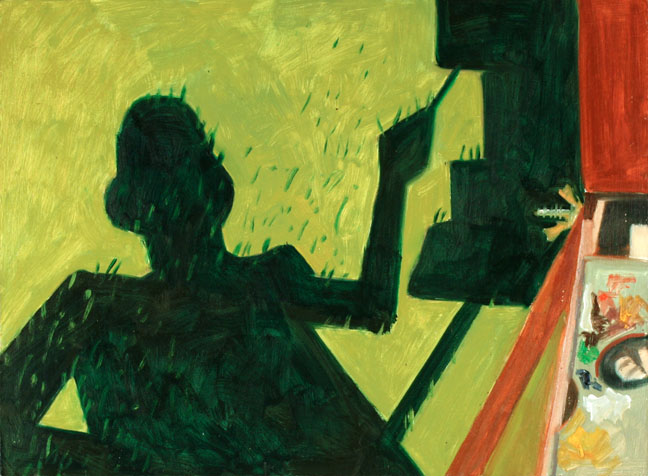
Oil on masonite, 300 mm x 460 mm
https://www.alexandregallery.com/lois-dodd
Lois Dodd is an American artist whose work deals with her “communal relationship with nature” with imagery of “cropped views of solitude” (Todd Bradway, 2019. Landscape painting now: Lois Dodd). Dodds paintings are plein-air made outside a true connection to a history of modern painting taken from impressionist artists. The imagery and subject matter of Dodds works are rather familiar but at times subtly disrupt the normality in terms of what is ‘typically’ painted, there are often moments which have been shifted from the ideas of landscape and looking, drawn away from the ‘norms’ of landscape paintings, imagery of burning houses which still through her colour pallet and brush marks look idyllic, the works which most interests me are her paintings of her own shadow made outside, shadows on the grass a subject which has not been a focus or considered a self portrait as much in arts history, I am intrigued by the shadow as a glimpse into the artist but also how it’s a temporary imprint on the land, shadows show being in a space which not showing any physicality apart from a presence or lack of light, it is specific to where one is in relation to the sun when outside.
(Todd Bradway, 2019. Landscape painting now: Lois Dodd. pg. 38-39.) (https://www.alexandregallery.com/lois-dodd)
Elaine de Kooning
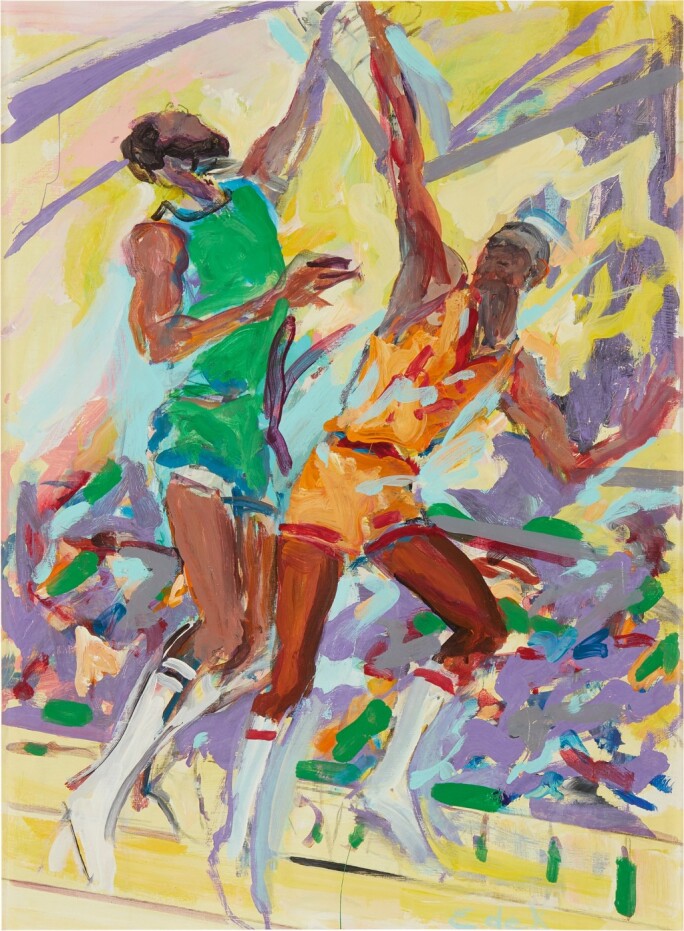
Oil on masonite, 762 mm x 558 mm.
https://www.mutualart.com/Artwork/Basketball–1-A/A5F87AD885880690
Elaine de Kooning was an American artist whose work is abstract expressionist paintings often at times figurative and energetic in nature, there is a real sense of material, surface and subject matter. Painting portraits at that time under abstract expressionism, created a new meaning to the person “painting a portrait is a concentration on one particular person and no one else will do,” (de Kooning in Susan Stamberg). Although this relates to people and portraiture I can’t help but find myself resonating with this quote in relation to being in the natural environments which I explore, like many others I experience a certain area, sitting, observing a moment of that specific area in that time intensely and personally. De Kooning’s paintings are almost this mixture of abstract but also realism, there are parts which become grounded in material sitting next to areas which are depictive these two languages are sitting next to each other working together and not fighting against each other.
(https://www.npr.org/2015/05/13/405934531/for-artist-elaine-de-kooning-painting-was-a-verb-not-a-noun)
(http://www.artnet.com/artists/elaine-de-kooning/)
Claire Tabouret
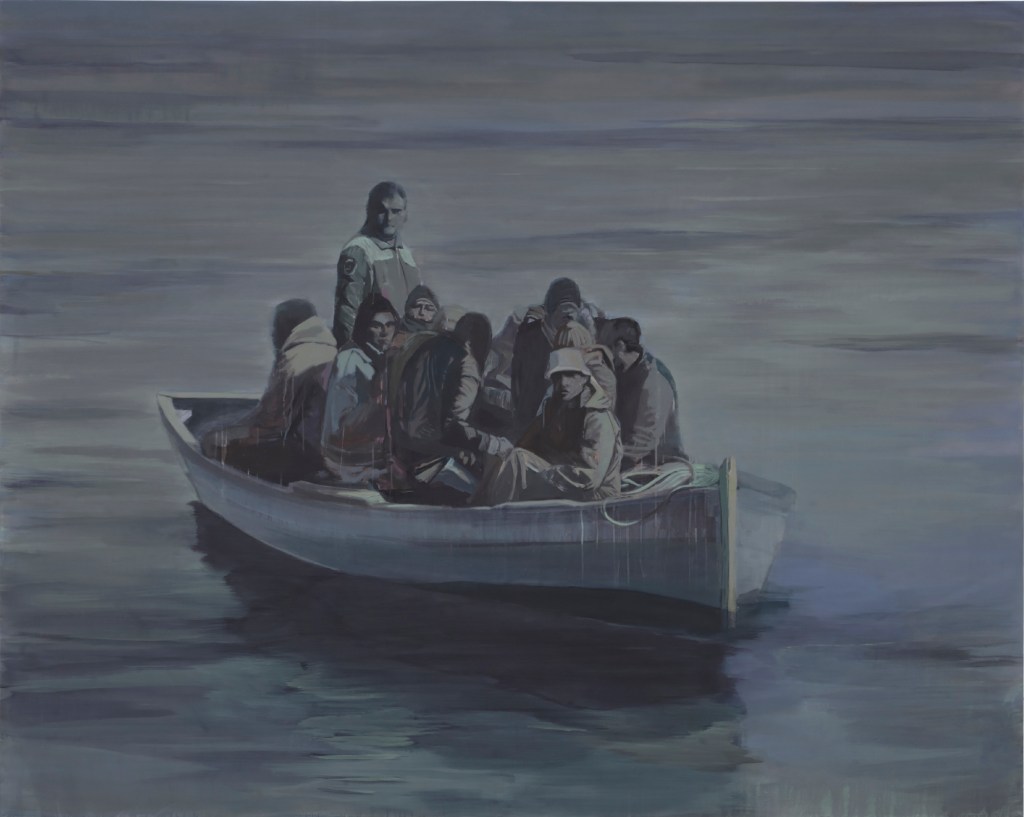
Acrylic on Canvas, 2000 mm x 2500 mm.
http://www.clairetabouret.com/en/works-painting/
Claire Tabouret is a French painter whose works are often figurative depictions of people and often at times of political nature surrounding imagery of immigration and people in confrontation. The subject matter is painted in a way where the colours emphasize the people in the paintings, the way in which Tabouret uses and layers colour is immaculate and has a real sensibility to how colour can help elevate and create a story and mood to a paintings especially when dealing with subject matter which can initially be difficult to process. I often question how I can be truthful to what I am painting and how I can be respectful especially through the means of which I am making and how I push through these methods of making.
(https://www.perrotin.com/artists/claire_tabouret/487#biography)
(https://www.alminerech.com/artists/4769-claire-tabouret)
Jane Chang Mi

Generative animation; 5’10” diameter. Video length 9:26.
Jane Chang Mi is an artist and ocean engineer, Chang Mi’s work looks at the post-colonial ocean environment through a variety of methodologies and medium. I became aware of Chang Mi’s work through a critique and became fascinated with the ways the subject matter / ocean was being captured especially seeking understanding of landscape through the perspective of someone who has a very specific and other knowing knowledge of these landscapes, her scientific research brings a new way to understanding her environments and ways of approaching the research dealt with.
I find these connections to be of interest in ways of thinking through my own work and how apparatus and scientific methods can be brought into an artistic practice and how these can push new ways of making and resolutions of outcomes.
(https://www.space118.com/artist/jane-chang-mi/)
(http://janecmi.com)
(https://thecreativeindependent.com/people/visual-artist-jane-chang-mi-on-being-surrounded-by-water/)
Eva Hesse
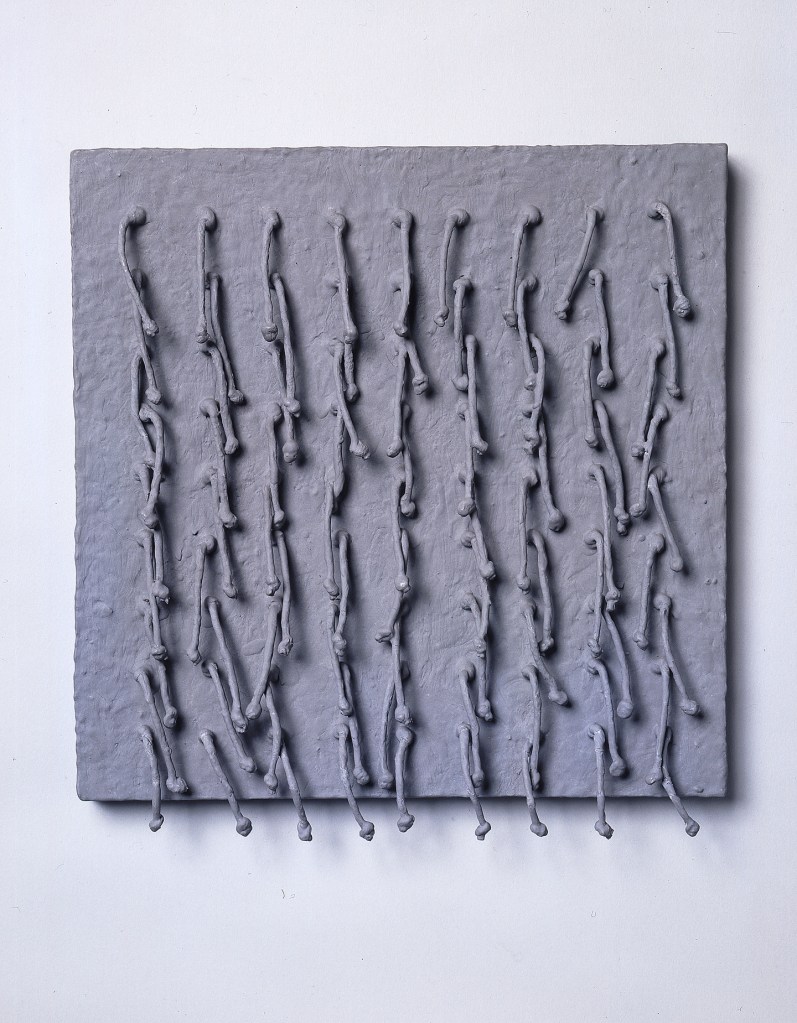
Varnish, liquitex, Sculp-metal, cord, Masonite, 10 x 10 x 1 in.
National Museum of Women in the Arts, Gift of Wallace and Wilhelmina Holladay; © The Estate of Eva Hesse, Hauser & Wirth Zürich London
https://nmwa.org/blog/artist-spotlight/tied-in-knots-eva-hesse/
Eva Hesse was an German born American artist, Hesse’s is considered one of the pioneers of Post-Minimalist artworks, she is well known for her sculptural works in specific the materials of which Hesse worked in, materials such as Latex, fiberglass, plastics and metals to name a few. Her works are seemingly full of life, they sit as if they were almost alive, the materials heighten the sculptures presence in space. I am drawn to the materials, the use of materials and from a Post-Minimalist point of view how materials can speak out, holding so much energy and presence is something which I would like to include into my own work, to have an understanding of the lively nature of the mediums I am using.
(http://www.artnet.com/artists/eva-hesse/)
(https://www.artnews.com/art-in-america/features/at-the-borderline-of-uncontrollability-six-lessons-from-eva-hesse-60064/)
(https://www.hauserwirth.com/artists/2810-eva-hesse)
(https://www.sfmoma.org/publication/eva-hesse/)
Cecily Brown

Oil on linen, 246.4 cm x 312.4 cm.
https://gagosian.com/artists/cecily-brown/
Cecily Brown is an English painter whose work plays off of historical motifs. Browns paintings have always been on intrigue to my work through material and technique, her work has a strong approach, seriousness in the way these paintings are created and executed. The paint sits with myself when I view the works. I have seen a painting of hers in person and was drawn into Brown’s powerful brush marks and large scale, I was encapsulated by the paintings and how they worked at difference distances from afar figurative elements were visible and fleshed out, the closer I got the more I was aware of the brush marks and paint, these motifs could be drawn to impressionist paintings but pulled and pushed further. Brown’s work plays off fragments of the world she sees around her and through the process of viewing the world every day, imagery sometimes comes from politics or news surrounding or pushing feminist freedoms. Voyeuristic characters are included in paintings looking and observing the scenes which are composed, Brown is consciously placing and unconsciously placing figures.
(https://www.apollo-magazine.com/now-i-can-steal-from-myself-as-much-as-from-other-artists-an-interview-with-cecily-brown/)
(https://www.paulacoopergallery.com/artists/cecily-brown#tab:thumbnails)
(https://www.studiointernational.com/index.php/cecily-brown-review-blenheim-palace-oxfordshire)
(https://www.youtube.com/watch?v=dCezAlWpCuc)
 Llenyd Price