Land surveys and protection has become a place of research which I am a bit more interested in now than previously before, the spaces which I have been looking at sometimes hold these survey and tracking equipment, many of which go undetected upon first arrival but hide in the background, these tools help scientists understand the life within these ecosystems and often track where to go. Faint Paths weave in and out of the foliage in front, revealing its self the further I trek inwards.

Tracking tunnels help in finding fauna which live in the wild, normally for tracking insects and sometimes small rodents, the ink leaves behind foot prints which help to identify species.
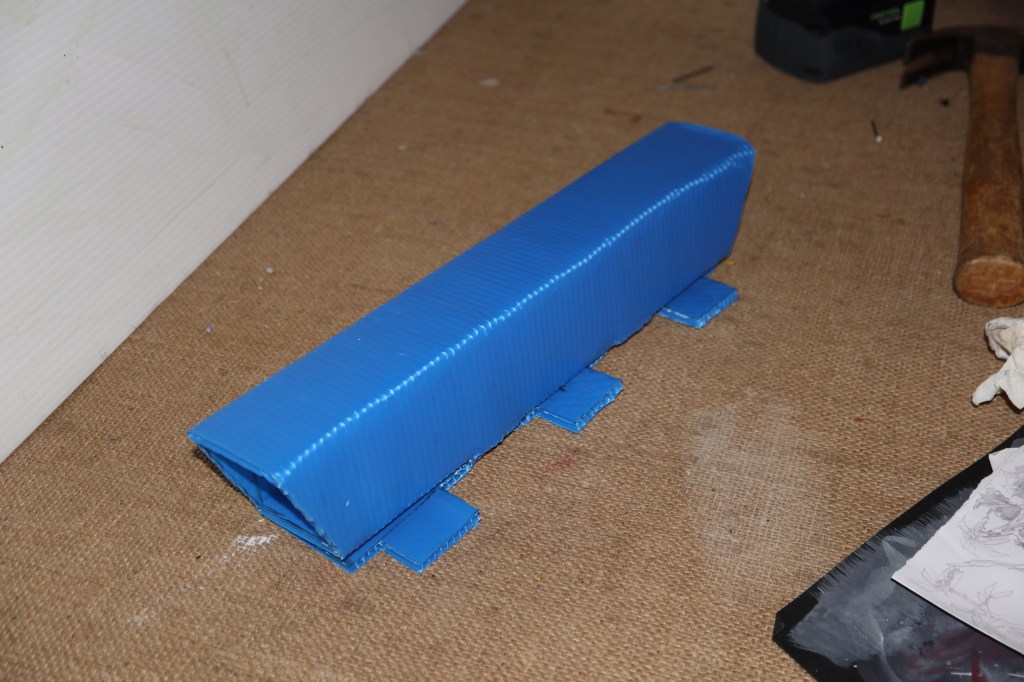
In my current studio practice I have become obsessed almost with recreating these materials but focusing mainly with the surveyed spaces in conflict with the spaces longevity and assumption that these spaces may not be as they are in the future. These recreations are then made of building materials or building site materials, this one above made of a plastic material cut out and reformed to copy the tracking tunnel found in the image above.

Another object that is common is the Department of Conservation track marker(2009), which is sometimes found plotted along walks and sometimes off the track for surveyors to find certain things.

Dotted alongside track paths placed at 1.6 m guide and weave between bush, tracks sometimes faint help link each together [1].
Different coloured markers also mean and direct the park rangers and scientists to specific items such as traps and tunnels.
The purpose of choosing the track markers is the idea of navigating land, it becomes an idea with contrasts well with how we as people navigate through cities using road signs and maps, but also looking at the light test done to test visibility.

I also decided to create the shape as the current shape as I wanted to focus on the light tests instead of playing with multiple ideas and would, to me, become overwhelming in terms of information.

Bibliography
References
- Jacobs, R.J., Lewes, C, and Laird, I.K. Track markers : improving their visibility. Conservation Advisory Science Notes No. 113, Department of Conservation, Wellington. 23p.
Figures:
- Lhirodenteradicationproject.Example Tracking Tunnel. 2017. Tracking tunnel. Retrieved from: https://lhirodenteradicationproject.org/the-project/monitoring/
- Price, Llenyd. Tracking Tunnel. 2020.
- Sarang.Department of Conservation track marker. 2009. Digital drawing. Retrieved from: https://en.wikipedia.org/wiki/New_Zealand_tramping_tracks#/media/File:Trackmark.svg
- Michal Klajban. Track marker in Tararua Forest Park.2015. Photograph. Retrieved from: https://en.wikipedia.org/wiki/New_Zealand_tramping_tracks#/media/File:Tararua_Range,_New_Zealand_(15).JPG
- Jacobs, R.J., Lewes, C, and Laird, I.K.Photocopies of the marker colour samples used in this study. 1995. Photocopy. Various dimensions. , Department of Conservation, Wellington: New Zealand, https://www.doc.govt.nz/Documents/science-and-technical/casn113.pdf
- Jacobs, R.J., Lewes, C, and Laird, I.K. Triangle shapes used in this project. 1995. Digital image. Various dimensions. ,Department of Conservation, Wellington: New Zealand, https://www.doc.govt.nz/Documents/science-and-technical/casn113.pdf
 Llenyd Price

.JPG)