

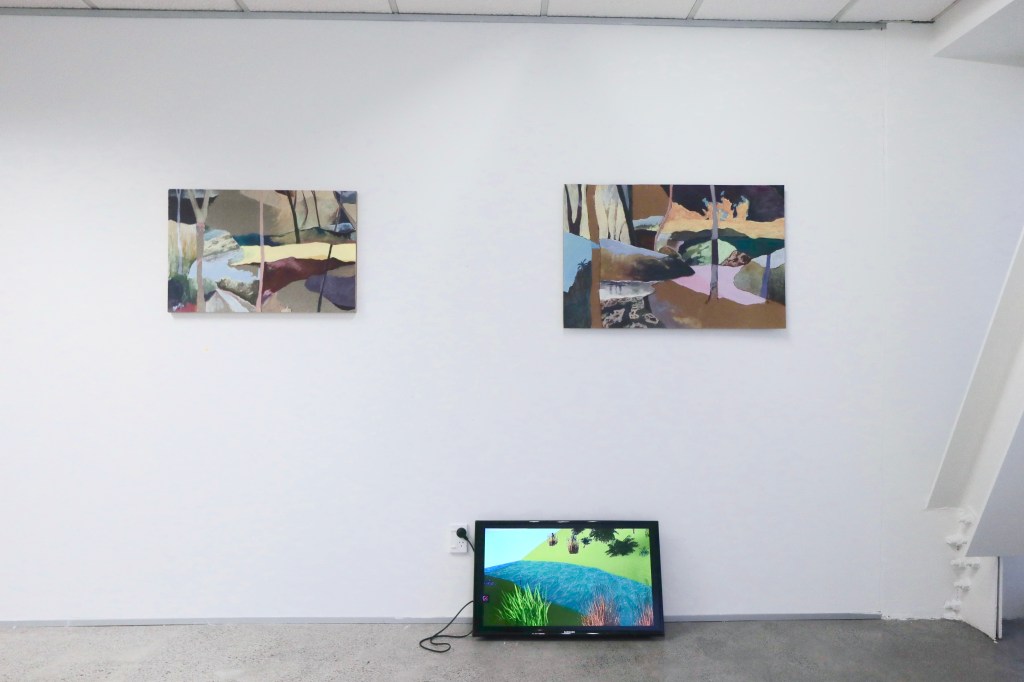


These works exist in a space of conflicting ideas. These are uncertainties with myself towards understanding my place as an immigrant to Aotearoa, while painting its landscape.
I attempt to highlight these uncertainties through a contemplation of processes which are stopped and restarted, never fully finished.
Presented are a series of works which are in a questioning and developing stage. Works are amidst change and development, contradictions prevent work to remain as complete or traditional visual replications of landscapes.
By shifting from the finished perspective, I am attempting to show my investigation of these places which have previously been painted by early colonial painters. Through using the topology of landscape in those paintings, I revisit the areas over time as a form of revision and contemplation toward my own place in Aotearoa. The past histories revisited within a contemporary setting can reveal the changing environments over time, and destruction of indigenous land.
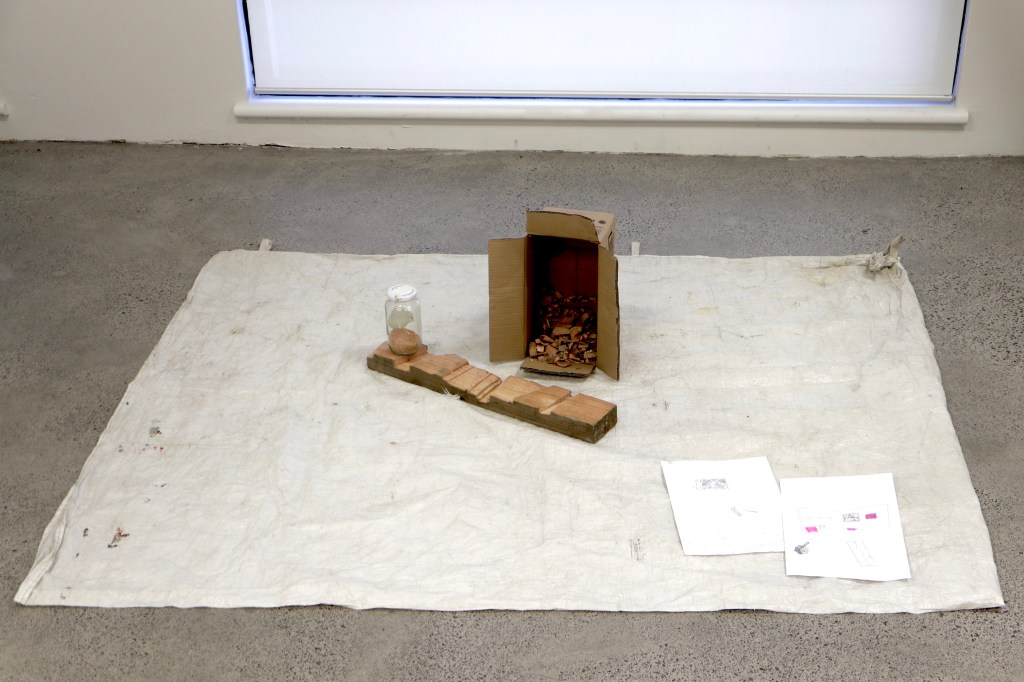
Additionally I am interested in the use of material such as found and discarded wood and other building materials as a reflection of the inherent qualities of peoples industries surrounding land. Qualities which include the material’s history and its easy ability to be altered through human impacts and climatic effects.
Works
The Close of an Autumn Day – Waikato River (done in Spring)
750 mm x 492 mm, house paint on concrete panel, 2020
Maori Pah, Waikato(not sure which Māori* Pā*)
905 mm x 590 mm, house paint on board, 2020
Untitled video
Duration: 1:46, digital rendering, 2020
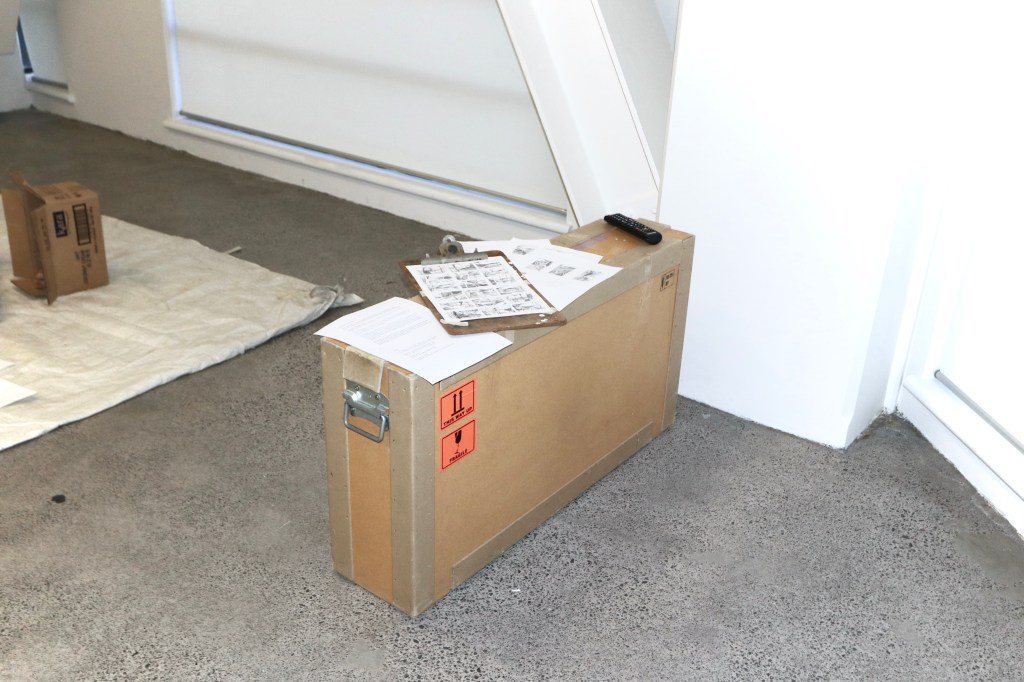
Changing topology
installation, wood block, cardboard box and glass jar, 2020
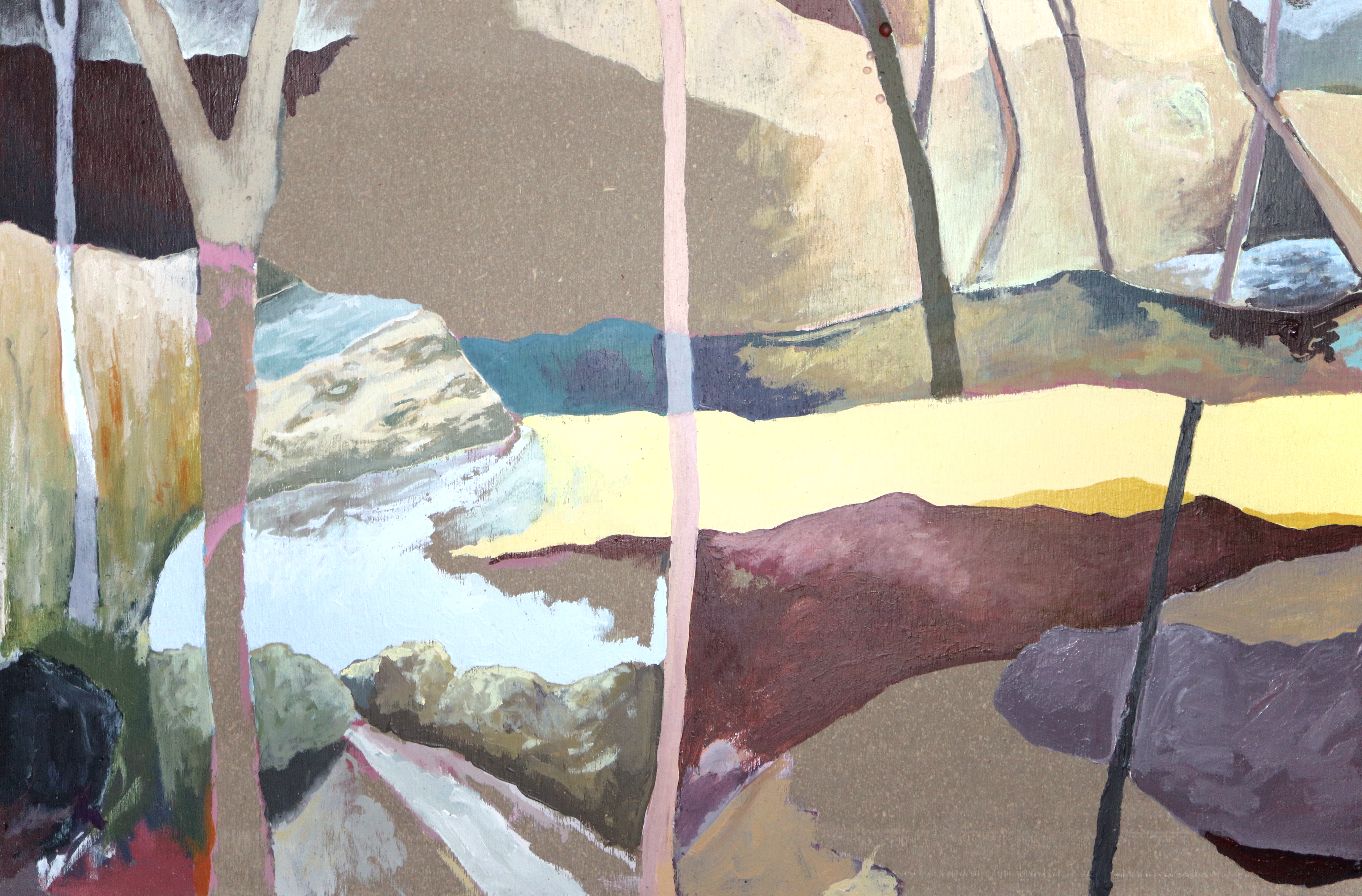
750 mm x 492 mm, house paint on concrete panel, 2020
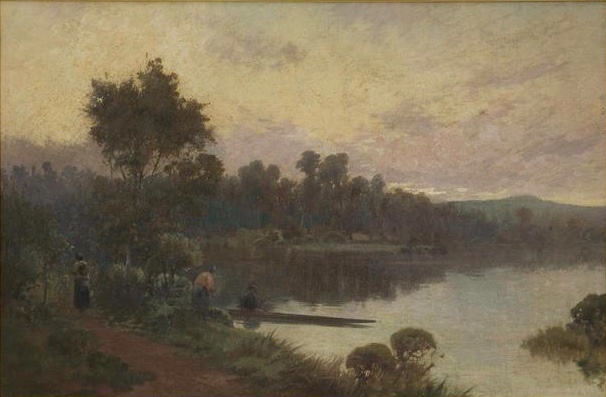
Right: The Close of an Autumn Day – Waikato River
750 mm x 492 mm, Oil on canvas, 1906
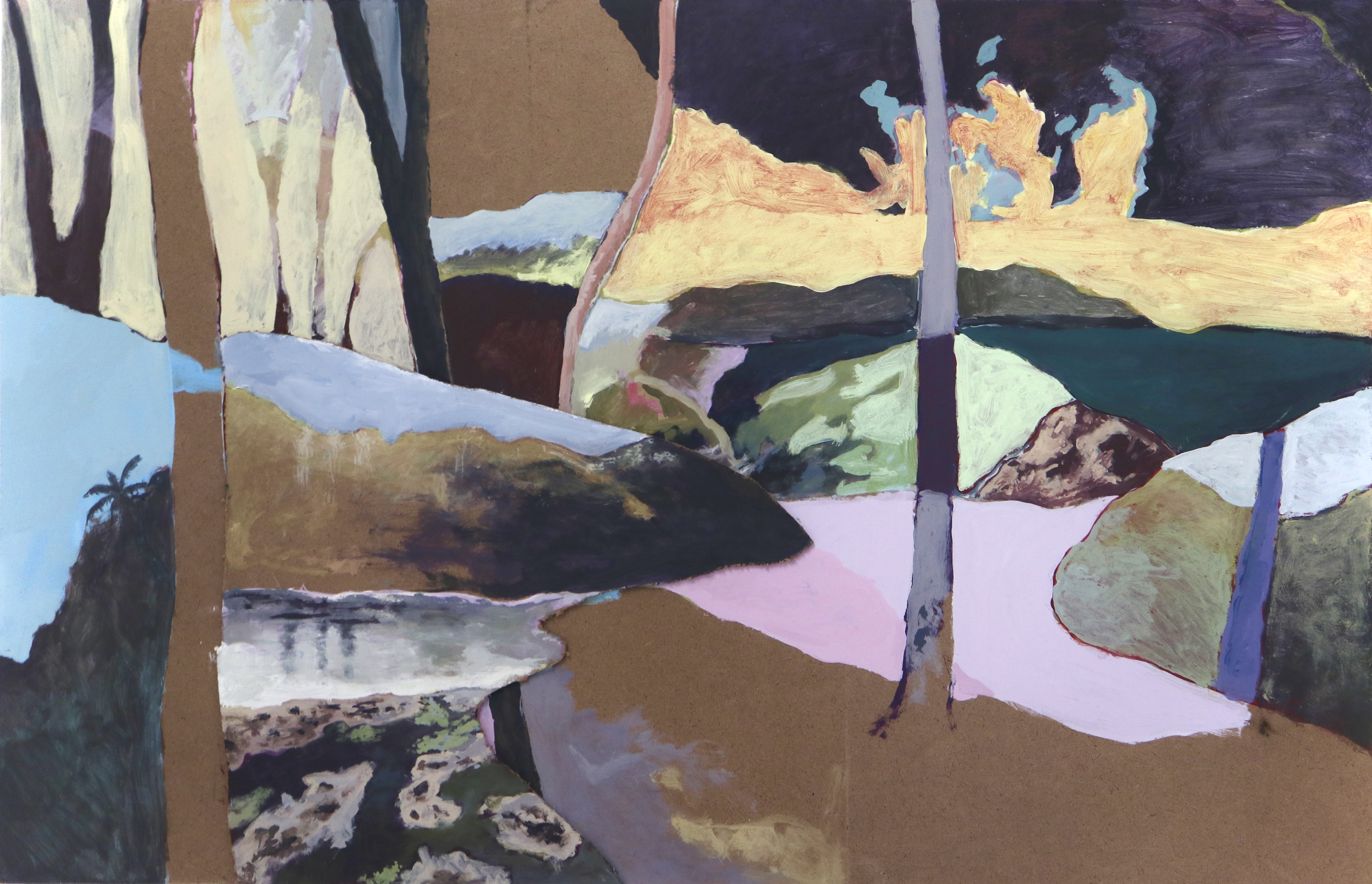
905 mm x 590 mm, house paint on board, 2020
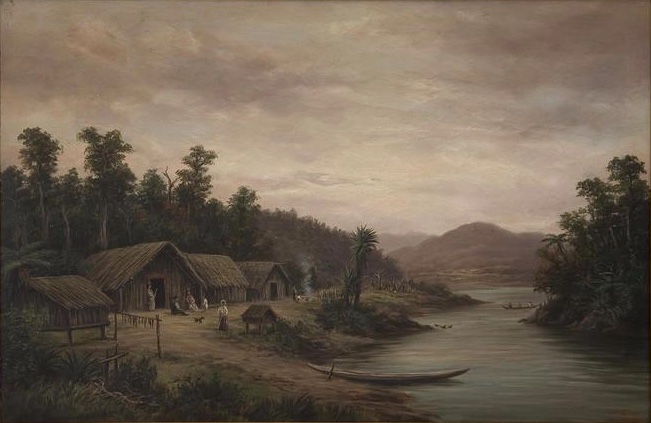
Right: Maori Pah, Waikato
905 mm x 590 mm, Oil on canvas, 1900
Side by side these images almost feel disturbing and difficult to look at, the colonial history all seems to lay on the other side of the paintings, objectified almost from a point of otherness. I am always scared that my paintings may be seen or read as removing indigenous Māori people, but my intension is to show what these spaces are like now using paintings as a way to indicate the histories. I am also curious on how to approach lost spaces of Tapu, lost as in to the people who may pass by and through, how do we approach sacred space without knowing of their significance and history?
References
Fig 1. https://collection.waikatomuseum.org.nz/objects/21607/the-close-of-an-autumn-day-waikato-river
Fig 2. https://collection.waikatomuseum.org.nz/objects/21630/maori-pah-waikato
Feed back
Research and Thinking
Ideas – generosity of spirit feedback, Relationship between different ideas?
Material and process overlap different, viewpoints, terrain, all related abstraction in painting playfulness? Pink / irreverence? (Unresolved)
Video / Wood connected. 3D terrain. Sound drew me away / towards the object work.
(Yolunda ‘sounds cheesy’)- Like kids presentation – Tui – commercial and cheapens this work
Historic NZ?
Not recognizable as NZ trees
Does painting bring you back to NZ territory
The fern as an identifier of Aotearoa
Not otherwise obvious
Colours appear of Australian possibly?
a specific type of place
tonal modelling not visible painting
what is finished conflict?
what connections do I have – Claim?
What is your (My) Relationship?
Why am I drawn to it?
spaces overtime
What is important – an escape presence in a good place.
Staking a claim – Material use introduced material
How you named it – would change
Māori name
Wood / Concrete
Wood chip from specific place
connection from painting to other things
more materials perhaps – found colour – collage
What is the connection of its painting to others now to then connect are they the focal point now.
track walk – enjoy the environment while thinking of the terrain in 3D detail
Horizontal planes disturbed by physical moving of the video.
Dust / Chips could they be used in painting?
Māori pah one – colonial naming scenario – Tapu places – and history?
Some pā not where they were abandoned
War zone / Fort pā culturally sensitive place even abandoned. Still Tapu for the Iwi
Access – are Pakeha aware? It is difficult to respect if it is unknown where these sites are
In Hamilton, Templeview – forest / bush original Pā Whare still there always walking around it.
Hidden histories of places could be researched more deeply without taking away the joy of visits to place.
conflict can push the work further. Tension is what many people feel.
Valid – your own feelings how do you respect the place not knowing of its specific significance?
As a responsible person, always limited research can open doors.
Ayeshas talk – commodity of culture exchange, the desire to have curiosity builds a respect for it.
Culture is not something that can be eroded?
If you make a mistake – apologize and move on.
Māori understand you only know a small amount and acknowledge your effort / as exchange
Not taking and giving its reciprocal
No need to apologize to love nature. The feelings you have can provide an ‘edge’ in the work!
Keep talking to people about how you want to do the work in precious sites.
Peter Robbinson
Shapes connecting, rectangle / pages of a book, viewpoints
Chris Johanson – Installation struts in paintings
Ned Kelly Paintings
Nick Austin – material painting aspect
Barbara Tuck – the sublime in painting
Story telling / memory of what I’ve passed
Real / Hopeful / remembered
Past / present / future
Moving space
Layering isn’t just a strategy – term of engagement
Narrative – stepping through the space
think through materiality of painting
Exploring the materiality of painting / enrich the surface
 Llenyd Price